For better, for worse,
for richer, for poorer,
in sickness and in health,
to love and to cherish,
till death us do part.
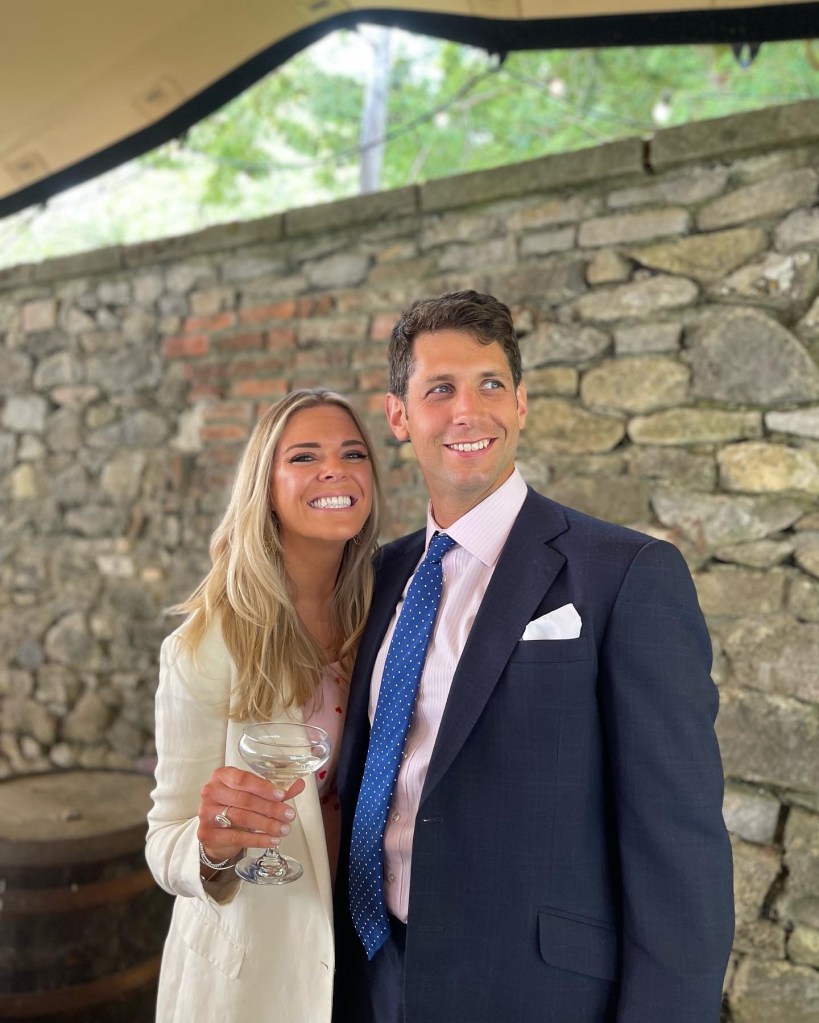
Nearly ten years ago my husband David and I said these vows to each other. We were young and naive but so in love.
We didn’t have a home of our own or a plan. We’d only just started our careers.
We moved into our new home after our honeymoon. We had to go shopping for our furnishings – borrow a TV stand and dining table – everything was a bit bare and makeshift. We didn’t know our own style or what we really liked – we needed to grow into that. We didn’t have things like an ironing board or cheese grater, we’d never paid a window cleaner to clean our windows. We didn’t know how to descale a kettle or how you can save money if you have a Tesco Clubcard.
All we knew was that we loved each other and wanted to spend the rest of our lives together.
That’s all we needed to know.
I look back and love our innocence. Just two people in love. It wasn’t complicated.
But then life had other plans and we quickly found out we had so much to learn.
Because we didn’t know that we would have a severely disabled child. We didn’t know that the lives we presumed we’d have together would completely change. We didn’t know the pressure there would be on our marriage as we endured hospital appointments, operations, stays….. heartache. We didn’t know the pressure we would endure as our lives became devoted to caring.
Caring for the most precious little girl. The love of our lives. But caring nonetheless.
Parents of children with disabilities go through so much. It is so much more than those with typical children. I cannot sugarcoat it. It’s true. If you know, you know.
Like many people, David and I like to be private about our marriage – but here I am sharing our experience because the strain on a marriage isn’t often spoken about openly in relation to caring for a disabled or medically complex child. This is another thing parents of disabled children hide away from the world. Divorce rates in these parents are much higher than those with typical children. And when you are in the midst of all of this heavy stuff – you feel so alone. Like you’re the only couple going through this pain. The only couple living without sleep. The only couple arguing that someone needs to wash up the syringes. The only couple having deep conversations about how you are going to care for your child in old age. Or if you are going to lose your child.
But this isn’t true. You are not the only couple. These are feelings and conversations most parents of disabled children are having – along with so much more. And it’s a shame we all feel so uncomfortable sharing how our child’s disability has affected our relationships. Like it’s a dirty secret we shouldn’t admit.
If you are going through a difficult time in your marriage or relationship as you try and balance the anxiety and weight of caring – please know you are not alone.
The early days for us were tough. Really tough. We both went through a grieving process – but at different times. This put endless pressure on our relationship.
Initially I became obsessed with Louisa’s health and development. Continuously telling David something was wrong. Him, in – what I felt like was – complete denial. Me wondering if I was going mad.
Then the doctors started to agree. And I saw David’s denial slowly edge away. But – forever the optimist- he never looked too far down the road, never over analysed results or conversations with specialists. He trusted them. He didn’t need any more information than what they gave us.
I – on the other hand – found myself in a state of pessimism. Convinced Louisa was dying. Analysing every single result, every single conversation with the specialists. Googling all day long.
It blew my mind how we’d be in the same meeting, listen to the same words but hear completely different information. Our opposite personalities forever shining through.
Our situation was very unique. We’d just moved overseas – we’d only been in Canada for six weeks before Louisa was born. David, my husband, had started a new job, I had left my family and my job in the UK and we were in the process of trying to start this new life. It was just us and a two year old Fred.
Then our lovely Louisa joined us.
Everything felt pretty good. Everything felt pretty exciting.
We had this new life, new country, new house, new job, new friends….. new baby.
But I came to realise that having a child with medical needs did not fit into this new existence. The pressure of David’s new job and the stressful and difficult working environment he was surrounded by was intense. That was a lot on its own. He needed to focus on work – we didn’t have a choice – so I needed to focus on the children. We muddled through, but then medical things started to crop up more and more.
After months of tests and visits, I can remember the day we sat in the paediatrician’s office in a small, sleepy town in Alberta – completely alien to the life we’d left in London – and I asked Louisa’s paediatrician, a tall, older man with a kind face and grey hair, bluntly,
“Do you think Louisa is disabled?”
He looked at me, paused, looked at David.
“Yes,” he said calmly, “I think Louisa has a significant and severe disability.”
Silence.
David and I didn’t talk from that moment as we finished the meeting, jumped in the car and sped back to our house as David had to get back into the office – he wasn’t supposed to have been at that appointment and would work late to make up the time.
We didn’t talk. We gave each other a quick kiss, he gently kissed Louisa’s forehead as she slept peacefully in her car seat. Then he rushed off.
Silence.
I cried all evening. ‘A significant and severe disability’. Those words rung over and over in my head. My heart felt like it was physically breaking. I’d never felt pain like it. I put Louisa and Fred to bed. I cried some more. By the time David returned home late, I had fallen asleep, my pillow soaking wet from my never ending tears.
We didn’t speak about it.
Silence.
The silence was deafening.
It was just too painful.
We couldn’t find the words.
Silence.
When we started genetic testing for Louisa, my obsession with finding out what condition she had became intense.
There is a charity called ‘Unique’ which provides information about rare genetic conditions. They have rare chromosome guides – basically information booklets discussing the symptoms of specific chromosome and gene disorders. Each booklet goes through the features of the genetic condition, how it occurred, the outlook….. as much information as they have been able to gather. Some of these guides are thirty to forty to fifty pages long of scientific information and photos.
There are 287 information guides.
I read every single one.
Every. Single. One.
I made a list of the symptoms and features that fitted with Louisa’s.
Every night I took my pen and paper and read a new information guide and made a (not so) short list of the genetic conditions I thought Louisa could have. The list was long of potential syndromes.
Every night David would tell me to stop reading, to go to sleep. But I couldn’t. He didn’t read one. Only – seemingly reluctantly – he would sometimes listen to me read the ones out loud that I thought fitted Louisa.
I needed to know what was going on with my baby. I couldn’t understand -at the time – why David wouldn’t help me research. From the light of my laptop I’d look at him sleeping beside me and hate him for not wanting to help me go through the information. For being able to sleep when my mind was always racing. Thinking he didn’t care. Feeling like he wasn’t supporting me in my need to find out what was happening to Louisa. I understand now – he was dealing with it in his own way, a little slower, a little calmer. Not wrongly, just different.
But I was exhausted with what I felt like was his dismissal of all the scary things that were happening with Louisa. I now know that this way helped him survive the pressures of his job and his worry for Louisa. Whereas – in contrast- I lived in an unhealthy obsession trying to find answers for a long time. I thought it helped me focus my attention and made me feel like I was being proactive. But it was unsustainable. Our different responses didn’t connect at the same time. We were on our own individual survival modes.
If this is you, support each other through your different stages of grief. Don’t think you have to feel the same things at the same time. Accept your different experiences. I truly believe that over time you start to reconnect – if you just show each other acceptance and kindness.
Because, the truth is, David balanced me out. I was doing enough research for the both of us. He didn’t need to spend the hours I did on reading those booklets. As much as I didn’t see it at the time, I needed him to be the opposite of me. I needed him to be more composed, to have a more measured approach. Because I was going down a rabbit hole that wasn’t helping anyone. I was spiralling.
Yet, I also balanced him. He was often accepting of what he was told, he needed me to help him see that it was our duty to question things, that there were answers and fights we needed to have. That we needed to challenge some of the doctors to ensure Louisa was given the best treatment and services available.
We were at two extremes – maybe it shouldn’t have been like that – yet somehow it brought us somewhere in the middle. It allowed us to carry on. It allowed us to do simple things. It allowed us to still make plans and go on holiday, to still make new friends, to still laugh and enjoy things. It meant Louisa got everything she needed. It allowed us to live.
In the first meeting with Louisa’s geneticist I handed him my list of possible genetic conditions that I thought Louisa fitted. He looked at it and gave me a knowing smile. Kind. He explained to me how they would do Whole Exome Sequencing to see if they could find the genetic cause for Louisa’s disability. He thanked me for my notes (he probably threw them straight in the bin – I was that annoying ‘google geneticist’!) but he didn’t make me feel silly.
We just needed to wait for the results.
I could talk forever about the struggles of the early days. The first two years of Louisa’s life were hard in so many ways including the toll it took on our marriage.
But the love was always there. And on the days that it wasn’t, it always came back quickly. The laughter often found us – usually at inappropriate moments which made us laugh even more.
We sometimes hated each other but we always loved each other. I wish I had appreciated David’s devotion to us in those early days. I didn’t always see how he’d close down my laptop, put my notes safely on the dresser and tuck me up in bed as I fell asleep whilst doing my research. I didn’t see how he held it together for me yet cried in the shower. How he stood tall and supported me as I wept. I didn’t see how he’d go back into work after devastating meetings with specialists, put his work face on and work so hard to get his job done to the best of his ability. How he didn’t let anyone down. How he continuously provided for us and didn’t crumble under the stress. And there was a lot of stress. How his love and devotion to us meant we were always at the forefront of everything he did.
The early days I just saw me, I just saw my pain and my frustration.
Each year that has passed since I have fallen more and more in love with the man I get to call my husband. The man who has stuck by me through my darkest times. The man who has held me up as I’ve screamed about how our life isn’t fair. Who hasn’t judged me.
He is my world. My best friend. He is the only other person in this universe who knows what it is like to be Louisa’s parent. We get to share this beautiful honour. And he is the only other person who truly knows the love, the heartache and the fear.
We were two regular people, two regular parents who were thrown into a world that we didn’t understand. It was just us. It was scary. It’s still continues to scare us. It was a lot. It still continues to be a lot. These pressures are not easy.
But together we have always been better.
Our love story isn’t glamorous, but our love story is made up of bravery and devotion to each other. It’s just about love in its purest form. It’s not for show. Our lives are complicated but our love isn’t.
If you are in the scary early days. Give your partner a hug. Talk. Don’t let silence rule. Be kind to each other. It’s unrealistic for me to tell you to spend more time together and to go on dates – you’re unlikely to have the energy or resources to make that happen right now – but try to remember that little things are the big things – that cup of tea, that hand squeeze, that cuddle when you need it most. Don’t let resentment build. Remember you are a team, you are working together. Remember that this precious child of yours is loved by you both. Don’t give up on each other.
Better days are coming.
And love always wins.
 Rare and Relatable
Just beautiful. There must have been magic in the air the day you two found each other.
LikeLike